Creation myths:
Iroquois Creation Myth
http://historymatters.gmu.edu/d/6375/
The Origin of Japan and Her People
http://www.gly.uga.edu/railsback/CS/CSJapan.html
The Four Creations (Hopi)
http://www.gly.uga.edu/railsback/CS/CSFourCreations.html
Pan Gu and Nü Wa
http://www.gly.uga.edu/railsback/CS/CSPG&NW.html
Greek Creation Myth:
http://www.pantheon.org/areas/mythology/europe/greek/greek_creation_myths.html
The Egyptian Religion & Creation Myth:
http://www.historymuseum.ca/cmc/exhibitions/civil/egypt/pdf_eng/e-9802-c.pdf
http://historymatters.gmu.edu/d/6375/
The Origin of Japan and Her People
http://www.gly.uga.edu/railsback/CS/CSJapan.html
The Four Creations (Hopi)
http://www.gly.uga.edu/railsback/CS/CSFourCreations.html
Pan Gu and Nü Wa
http://www.gly.uga.edu/railsback/CS/CSPG&NW.html
Greek Creation Myth:
http://www.pantheon.org/areas/mythology/europe/greek/greek_creation_myths.html
The Egyptian Religion & Creation Myth:
http://www.historymuseum.ca/cmc/exhibitions/civil/egypt/pdf_eng/e-9802-c.pdf
Writing assessment:
In order for a story to be classified as a myth, it must meet the following criteria:
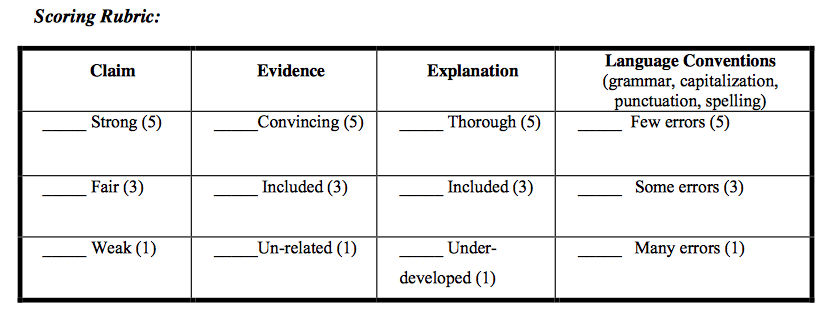
Choose one of the myths that we read in class. Use it to answer the question, “Why is __(title of your chosen myth)__ a myth?” In an argumentative paragraph, make a claim about why that text qualifies as a myth. Also, be sure to use and explain textual evidence to prove that the myth you’ve selected is actually a myth. Be sure to address all three criteria.
- Connected to regions, traditions, or belief systems.
- Answers “why?”
- Follows patterns
Choose one of the myths that we read in class. Use it to answer the question, “Why is __(title of your chosen myth)__ a myth?” In an argumentative paragraph, make a claim about why that text qualifies as a myth. Also, be sure to use and explain textual evidence to prove that the myth you’ve selected is actually a myth. Be sure to address all three criteria.