9th grade english honors
  • Home
    • Contact
    • Parents & Community
    • Rules & Expectations
  • Helpful Resources
    • Cornell Notes
    • Costas Questions & Bloom's Taxonomy
    • Literature Circles >
      • Literature Circles -Calendar & Assignments
      • Week 1 Roles
      • Week 1 Reflection
      • Week 2 Roles
      • Week 2 Reflection
      • Week 3 Roles
      • Lit. Circles Essay Proposal >
        • Introduction Peer-Review
        • Body Paragraphs -Peer Review
    • Socratic Seminars >
      • Socratic Seminar Standards + Checklist Form
  • Short Stories
    • "The Most Dangerous Game" >
      • Indirect Characterization (STEAL)
      • Additional Texts
    • "Harrison Bergeron"
    • "The Scarlet Ibis" >
      • Parra's Class: Discussion Questions
    • "The Cask of Amontillado" >
      • Ms. Parra's Class Discussion
    • "The Necklace"
    • "The Gift of the Magi"
  • Non-Fiction
    • Generation M2: Media in the Lives of 8- to 18-Year-Olds
  • Poetry
    • Collection of Poems
    • Poetry Videos
    • TPCASTT Strategy
    • Get Lit Curriculum >
      • Get Lit Poems
    • Poetry Assessment
    • Poetry Reflection
  • "Romeo and Juliet"
    • Background Knowledge >
      • Shakespeare's Life:
    • Act 1 >
      • Non-Fiction Articles
    • Act 2
    • Act 3
    • Act 4
    • Act 5 >
      • Non-Fiction Articles
  • "Great Expectations"
  • "Frankenstein"
    • Frankenstein Essay
  • "The Odyssey" + Mythology
    • Creation Myths
    • Norse Mythology
    • Greek Mythology >
      • Archetypes
    • The Hero's Journey >
      • The Hero's Journey Project
  • "To Kill a Mockingbird"
    • Background Knowledge Scavenger Hunt
  • Vocabulary & Literary Terms
    • Modes of Persuasion
    • Types of Irony
  • Writing
    • Grammar
    • Introduction
    • Body Paragraphs
    • Satire
    • Writing With Details
    • Argumentative Writing
    • Banksy & Subtext >
      • Love Hourglass
      • Defining Beauty
      • Social Media
      • "Just Google It"
    • Revision
  • Ms. Johnston's Class
  • Ms. Parra's Class
    • Interactive Student Notebook
    • Ms. Parra's Blog
    • Class Calendar
    • Semester 1 Evaluation
    • End of the Year Evaluation
    • Class Syllabus

What is an archetype?
Picture
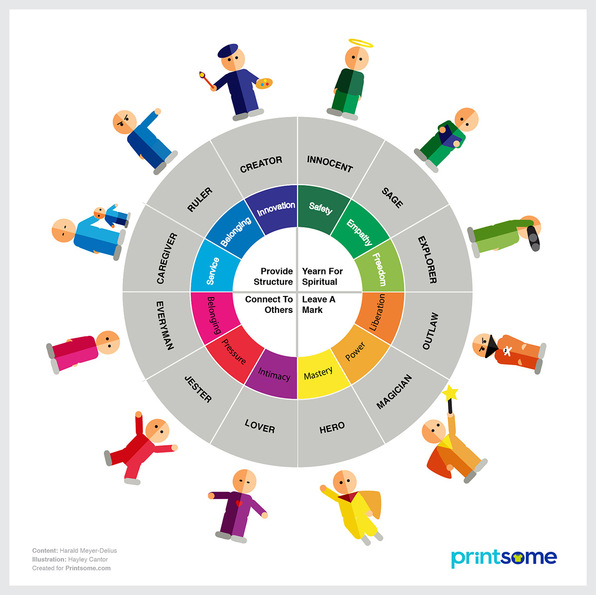
Psychologist Carl Jung created a list of 12 archetypes that he based on the observation of differing and repeating patters of thought and action that reappeared across time and place (expands different locations). 

The word archetype has its origins in Greek. "Arche" means "Original or beginning" and "typos" which means "mold or pattern."


List of archetypes: 

This list covers a small sample of common archetypes:
  1. The Jester
  2. The hero
  3. The magician
  4. The outlaw
  5. The explorer
  6. The sage
  7. The innocent
  8. The damsel in distress
  9. The caregiver 
  10. The scapegoat 
  11. The outcast
  12. The temptress
  13. The ruler
  14. The everyman
  15. The lover
  16. The creator
  17. The mentor

Archetype assignment

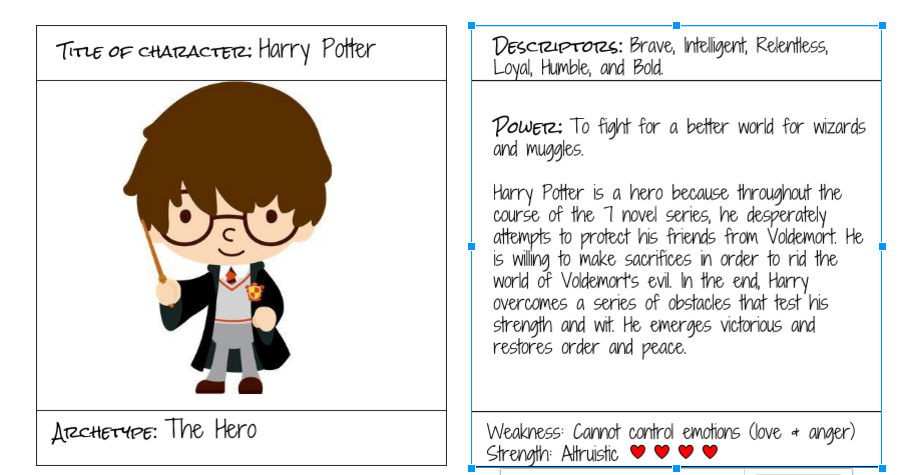
1. Choose an archetype from the list above.
2. Find an example of that archetype in literature, film, tv shows, anime etc.
3. Find descriptive words that capture the character and how he/she fits the archetypal role.
4. Identify weaknesses and strengths of the character.
5. Provide reasoning for why this character fits the criteria for this pattern.

​See example below:
Picture
archetype-cardapplicationofterm-template.pdf
File Size: 24 kb
File Type: pdf
Download File

Powered by Create your own unique website with customizable templates.